GAL Tirreno Eolie
Rethinking the Territory, enhancing biodiversity, promoting local products. Local Development Plan for the partnership municipalities.
GAL / LEADER
12 + 7 islands
CNR-ISMED
PSR 2014-2020
Tirreno-Eolie 2030
The project "Tirreno-Eolie 2030 - Rethinking the Territory, enhancing biodiversity, promoting local products" was developed within the Scientific Collaboration Convention between CNR-ISMED and GAL Tirreno, involving the University of Messina - Department of Economics.
The Lean & Quality Solutions Lab produced a comprehensive territorial scientific study covering all the municipalities of GAL Tirreno-Eolie, with an in-depth analysis of the environmental, socioeconomic, historical-cultural, and infrastructural context, culminating in the Local Development Plan.
The territory emerges as a premium tourist destination, characterised by a natural, environmental, and cultural heritage unique in the world. The strategic vision foresees safeguarding the natural heritage of protected areas alongside tourism development of the coast, developing the floriculture sector and integrating it with local agro-industry.
Tyrrhenian coast and Aeolian archipelago
The GAL Tirreno-Eolie territory encompasses the Tyrrhenian coastal strip of the Province of Messina and the Aeolian Islands archipelago, a UNESCO World Heritage Site since 2000. A unique environment characterised by outstanding natural and environmental value, low human impact, and a strong cultural identity.
The Tyrrhenian area stands out for its exceptional environmental and naturalistic quality. Historically featuring Mediterranean forests of holm oaks and downy oaks, agricultural production is oriented toward local consumption, with the exception of wines, liqueur wines, and capers.
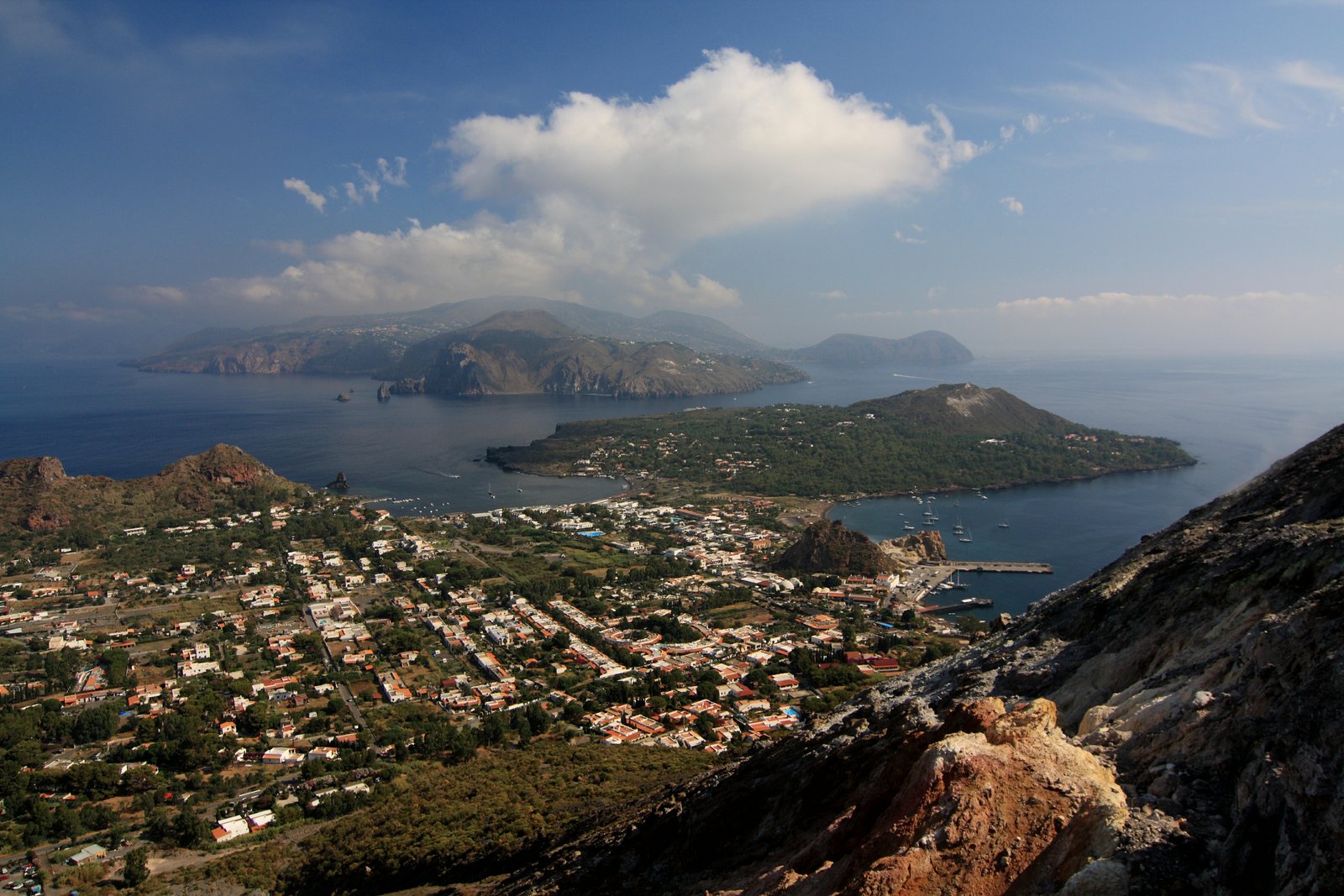
Panoramic view of the Aeolian archipelago and Lipari from Vulcano's crater. Photo: Wikimedia Commons, CC BY-SA 3.0.
Tyrrhenian municipalities (12)
Milazzo, Pace del Mela, San Filippo del Mela, Santa Lucia del Mela, Condrò, Gualtieri Sicaminò, Torregrotta, Valdina, Venetico, Barcellona Pozzo di Gotto, Merì, Terme Vigliatore
Aeolian Islands (7 islands - Municipality of Lipari + Salina)
Lipari, Vulcano, Salina (Santa Marina Salina, Malfa, Leni), Stromboli, Panarea, Filicudi, Alicudi
Territorial SWOT Analysis
The territorial analysis highlighted the distinctive characteristics of the area, the tourism potential linked to a growing market segment, and the constraints related to the current state of infrastructure and services.
Strengths
- +Outstanding environmental and natural value
- +Low human impact
- +Extensive farmland and quality local products
- +Strong cultural identity of the territory
Weaknesses
- -Weak productive system
- -Demographic decline in inland municipalities
- -Poor accessibility to parks and natural areas
- -Weak link between tourism and agriculture
Opportunities
- +Attractiveness of protected areas for high-income tourism
- +Quality tourism-agriculture supply chain
- +Regenerative capacity of the coastal strip
- +Place marketing for certified local products
Threats
- !Loss of attractiveness due to environmental neglect
- !Pollution and biodiversity deterioration
- !Conflict between mass and nature-based tourism
- !Uncontrolled exploitation of the territory
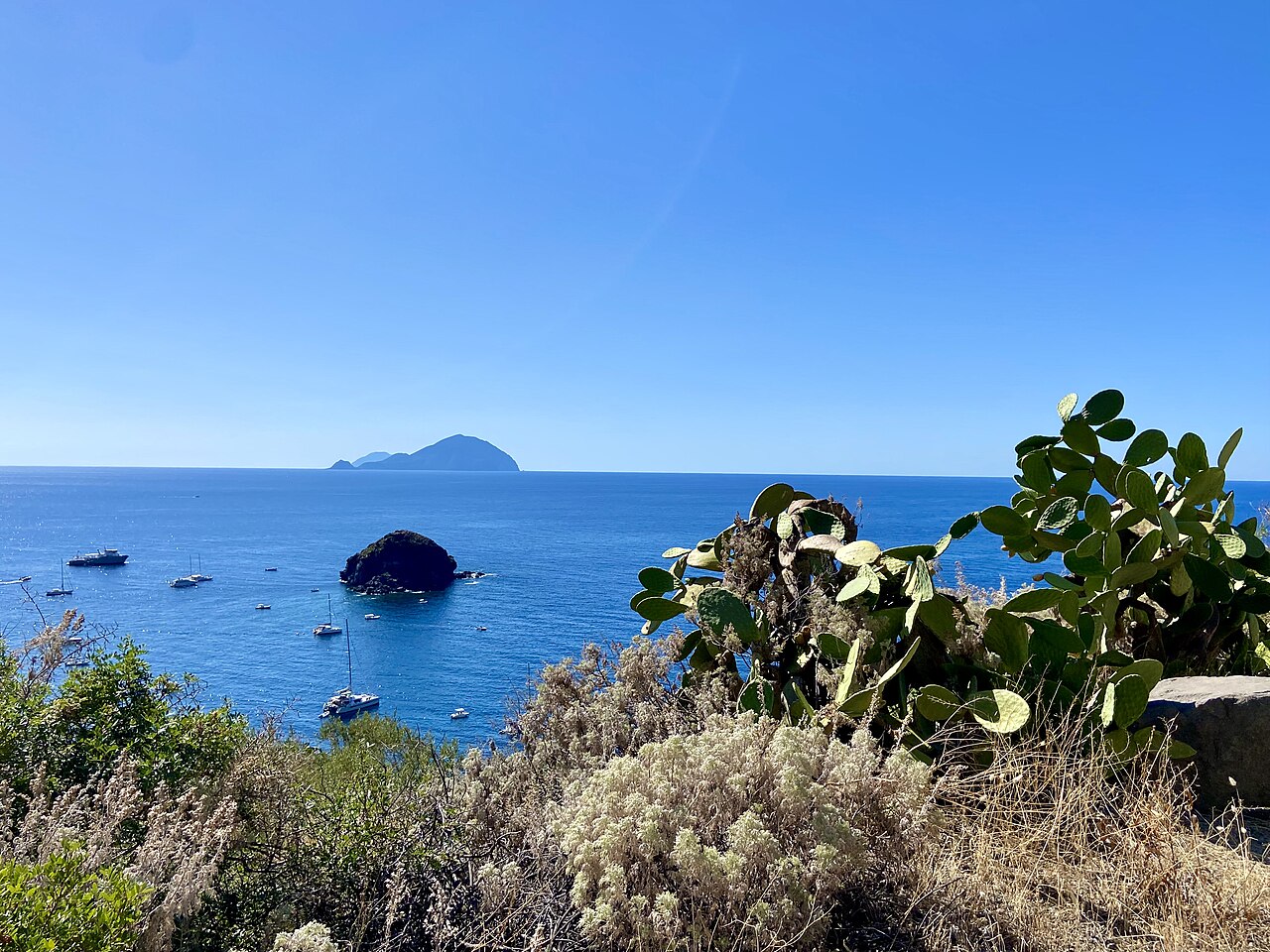
The island of Salina and the Aeolian archipelago: Mediterranean vegetation, prickly pears and the blue of the Tyrrhenian Sea. Photo: Wikimedia Commons, CC BY-SA 4.0.
Multi-level scientific approach
The study employs a rigorous territorial analysis methodology structured across four complementary dimensions, with deep dives into biodiversity in the Aeolian Islands and Tyrrhenian municipalities, floriculture, and the tourism system.
Territory & Environment
Urban planning, infrastructure and transport, historic architecture, mapping of abandoned hamlets, protected areas (nature reserves, SCI, SPA). In-depth study of biodiversity in the Aeolian Islands and Tyrrhenian coast.
Productive Fabric
Number, location and size of businesses by sector: agriculture, industry, services. Deep dives on tourism (bed capacity, hotel and non-hotel accommodation) and floriculture (number, size, positioning).
Economic & Social Framework
Population, age, education level, economy, unemployment. Analysis for each partnership municipality with detailed demographic and socio-economic indicators.
History & Traditions
Historical economic and social evolution of the Aeolian Islands, the coastal strip and the Peloritani area. Focus on ancient crafts and traditions, both existing and lost, geological and mythological notes.
Sentiero Italia and hiking tourism
The potential connection with the Sentiero Italia (Italian Trail) project represents a major place marketing opportunity. The analysis revealed that despite numerous hiking itineraries (stages SI-V27, SI-V28, SI-V29), there is no direct connection with the Sicilian stages of the Sentiero Italia yet | an untapped potential for eco-hiking tourism.

Night eruption of Stromboli, the "lighthouse of the Mediterranean". Photo: Wikimedia Commons, CC BY-SA 2.5.
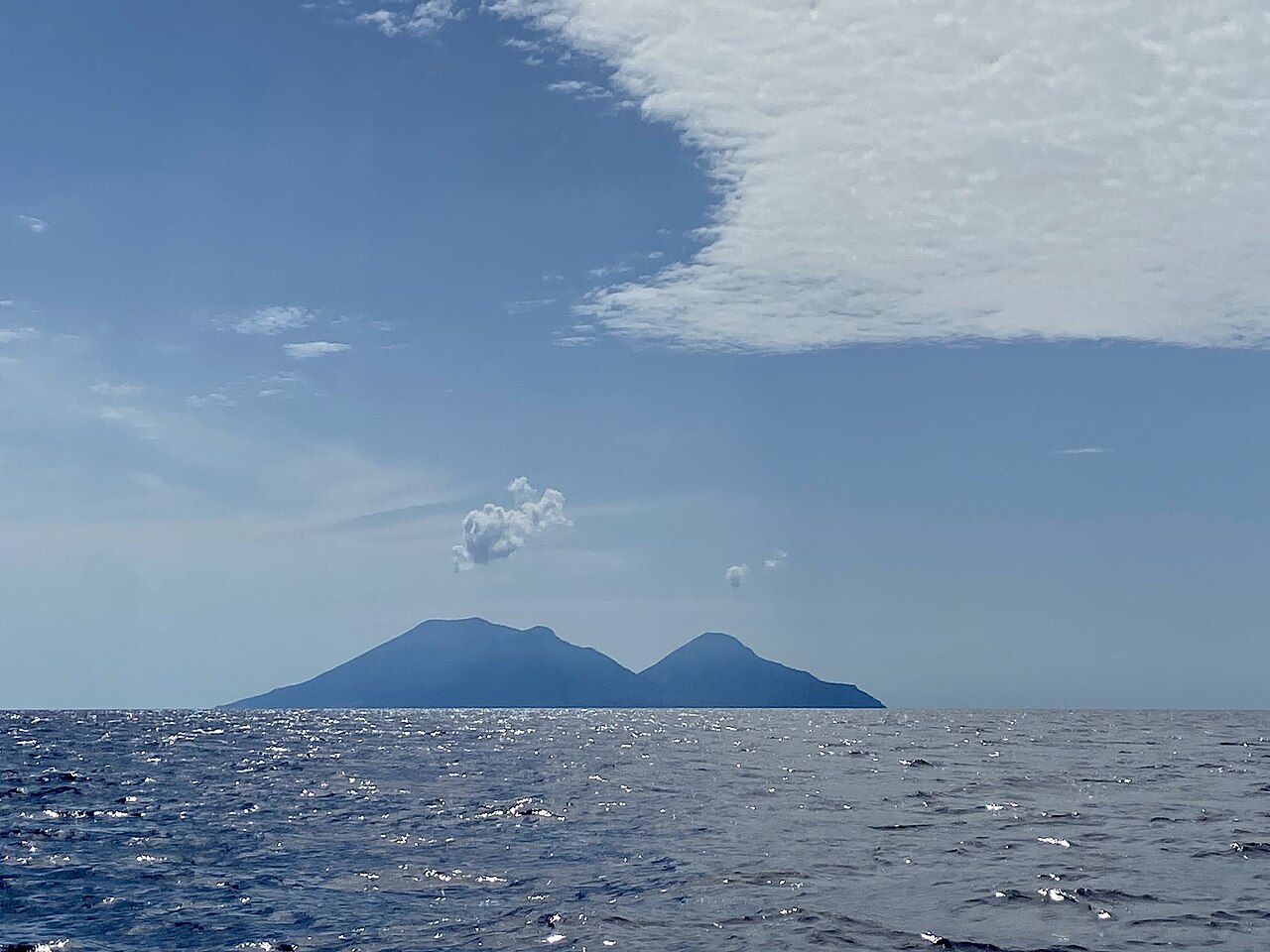
The Aeolian Islands from the sea: a crossroads of tourist routes and hiking trails. Photo: Wikimedia Commons, CC BY-SA 4.0.
Strategic vision for sustainable development
The strategic vision is founded on a guiding principle: safeguarding the environment to best leverage the tourism sector and emerging industries. This approach integrates nature-based tourism with the Messina area's agro-industrial system and local cultural heritage.
Territory & protected areas
Strengthening and qualifying the territory and protected areas, preserving the coastal natural heritage while ensuring sustainable use for lasting development.
Sustainable tourism
Developing tourism services and non-conventional accommodation (B&Bs, alberghi diffusi, hamlets), with eco-tourism Product Clubs and quality hospitality in inland areas.
Agro-tourism supply chain
Strengthening the agro-tourism chain by integrating floriculture, food & wine (Malvasia, Faro, Mamertino), local crafts, and Sicilian cultural heritage.
Specific objectives
Foster emerging sectors (floriculture) by leveraging existing infrastructure and coast-hinterland connectivity
Incentivise quality accommodation and tourism services in inland areas
Diversify the tourism offer to spread tourist flows across seasons and enable medium-long stays
Integrate accommodation and tourism services with the agro-food system and cultural heritage
Implement targeted marketing for high-value nature and environmental tourism
Engage local communities and economic operators in the sustainable development dialogue
Lines of intervention
The programme outlines long-term actions divided into pioneering interventions, prioritised by feasibility and achievability.
Protected areas enhancement
Comprehensive tourism plan with wooden paths and walkways, environmental awareness initiatives, Natura 2000 site management, and marine area marketing (Capo Milazzo, Aeolian Islands).
Sentiero Italia
Connecting existing nature trails with the Sentiero Italia project, creating a unique eco-hiking opportunity with national and international reach.
Non-traditional hospitality
Alberghi diffusi in historic centres and hamlets, eco-tourism Product Clubs (cycling, birdwatching, trekking, diving), eco-label service charter.
Ecological mobility
Hybrid buses, solar charging stations, intermodal exchange hubs, cycle paths, bike sharing, and hiking trails with panoramic viewpoints.
Agro-tourism supply chain
"Taste trail" for food & wine products, industrial ecology and mining archaeology paths, eco-design with traditional ceramics and terracotta.
Place marketing
EMAS certification, eco-tourism brand, Green Public Procurement, joining networks like "Italy's Most Beautiful Villages" and promotional consortia.
Research outputs
The project produced a comprehensive set of scientific and operational deliverables to support the territory's strategic planning.
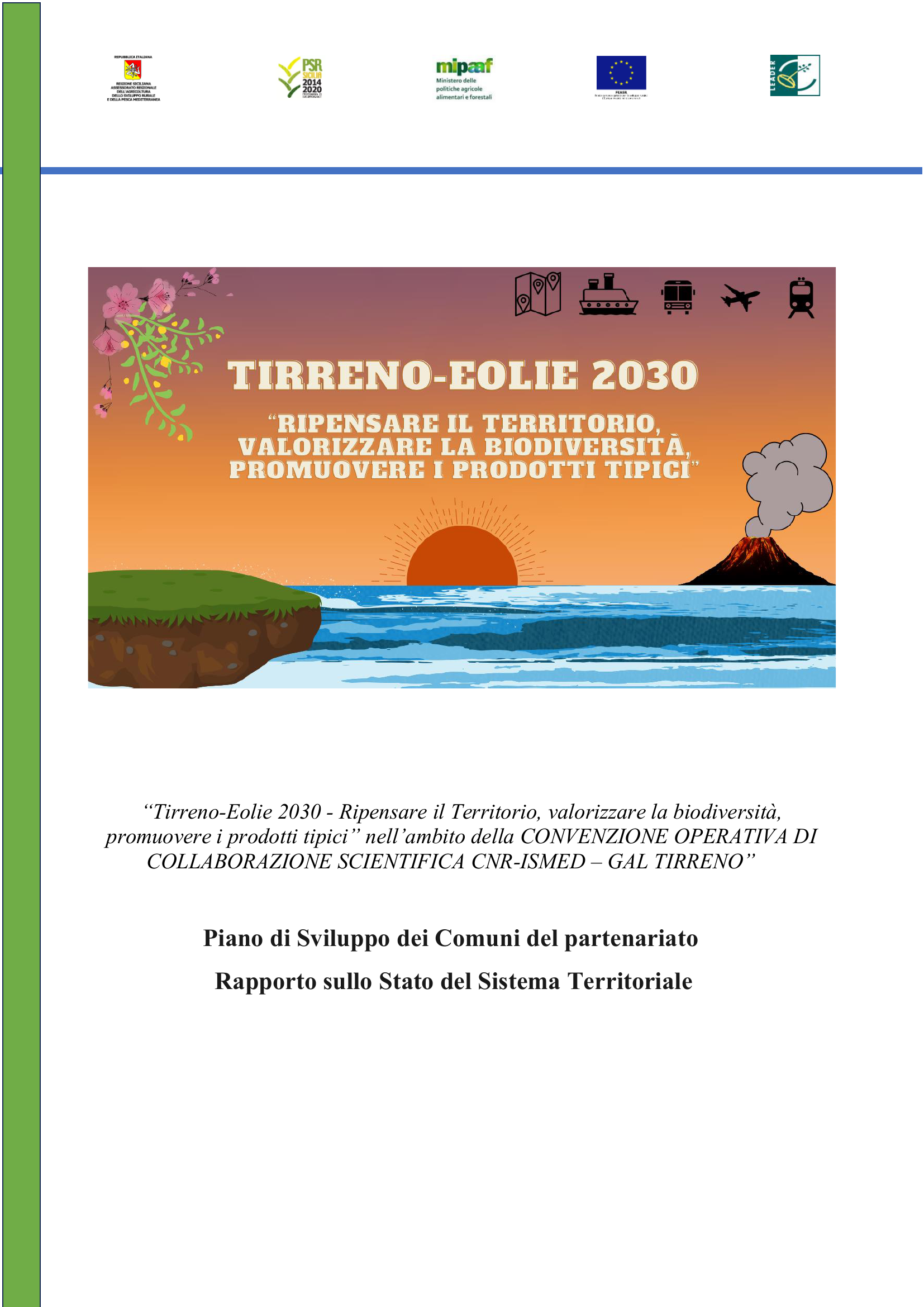
Territorial Report
Report on the State of the Territorial System. Complete multi-level scientific study of all partnership municipalities.
Local Development Plan
Strategic document with guidelines, objectives, sustainable development operations, and stakeholder negotiation contributions.
Scientific publications
Governance and Local Development: The Tirreno-Eolie Management Plan
Ioppolo G., Caristi G., D'Alessandro C., Bongiorno A., Szopik-Depczyńska K.
Territorial Development Domain Versus Digital Transformation and Society 5.0: The Tirreno-Eolie LAG Experience
D'Alessandro C., Szopik-Depczyńska K., Bongiorno A., Caristi G., Ioppolo G.
Sustainable Futures: Navigating Environmental Challenges Through Local Governance in the Tirreno-Eolie Area
D'Alessandro C., Ioppolo G., Bongiorno A., Caristi G., Szopik-Depczyńska K.
Working group
Scientific coordination
- Coord. Prof. Giuseppe Ioppolo
- Prof. Giuseppe Caristi
- Prof. Michele Limosani
- Prof. Katarzyna Szopik-Depczyńska
- Prof. Shapour Heidarkhani
Researchers
- Dr Alberto Bongiorno
- Dr Valeria Isgrò